
28–29 November 2026 · St Leonards
Train directly with Master Chen Zhonghua in Sydney
Chen Style Taijiquan Practical Method workshop
Go beyond watching the movements. Experience the difference between what Taiji looks like and what it feels like - and work with a method for learning it.
Registration and payment through Square. Opens in a new tab.
Two days A$380 | One day A$240 | Half day A$160 | Early bird discount before 31 Oct 2026
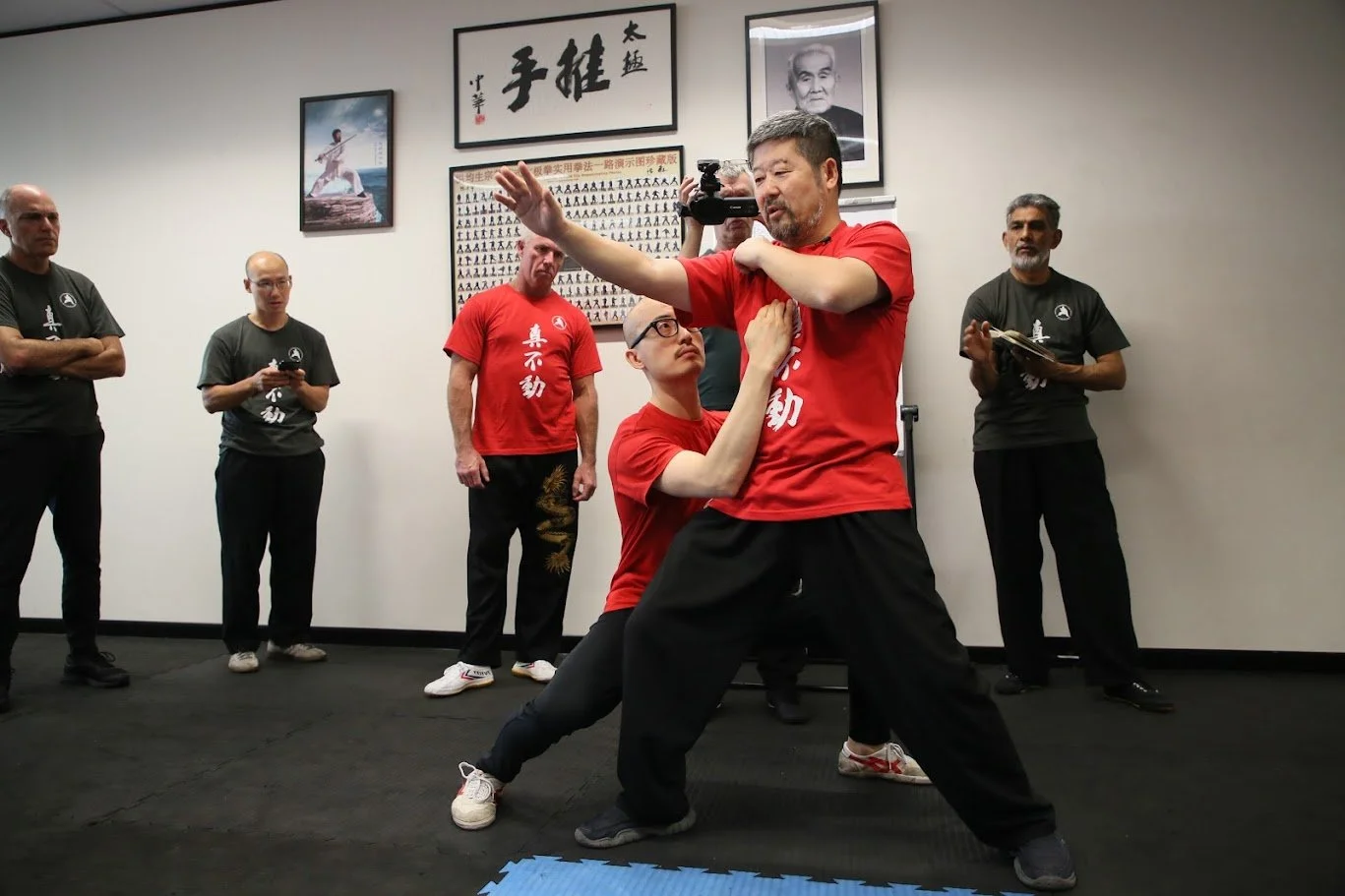
Hands-on learning at a previous workshop.
Two days of demonstrations, hands-on exercises and detailed instruction.
When
Saturday & Sunday
28–29 November 2026
Each Day
8:30–11:30am
1:30–4:30pm · Sydney time
Where
Evolution Performance Centre
St Leonards, Sydney
Why be there in person?
Watching is one thing.
Feeling what is happening is another.
You can watch Master Chen demonstrate a movement. You can try to reproduce what you see.
But seeing the result does not mean you know the process that produced it. Making contact with him during a demonstration can reveal something quite different from what you expected.
You may see him moving, yet discover through touch that what you thought was moving is not moving.

That difference is difficult to appreciate by watching more closely or copying the outward shape.
Direct contact gives you something else: a physical experience you can refer back to in your own training. You may not immediately understand it. You may not be able to reproduce it. But you have encountered a distinction that was not apparent from looking alone.
That is a central reason to attend: to experience Master Chen’s ability directly, then work with the instructions for learning the method.
The way of learning
Don’t just copy the result.
Learn the method.
When you watch someone with developed skill, you see what they can do. You do not necessarily see the process they followed to develop it.
Trying to copy the result can lead you to use whatever movement already feels natural. The appearance may be similar while the underlying action is different.
Practical Method asks you to approach the task another way. Rather than beginning with “How can I make my movement look like that?”, begin with:
“Am I doing what I was instructed to do?”

An instruction may not make sense at first because you are interpreting it through movements and experiences you already know. We are learning something for which you do not yet have a physical reference.
The temptation is to change the instruction into something familiar. The work is to follow it accurately enough to encounter something unfamiliar.
You need a clear instruction. You do not need to understand its full purpose before beginning.
Ask questions. Have the task clarified.
Attempt it, receive correction and practise again.
Understanding can develop through that process—not only before it.
Inside the workshop
What you will work on
Practical Method workshops typically explore foundational exercises, Yilu (the first barehand form), theory, applications and push hands. These provide different ways to investigate the same movement principles.
01 / EXPERIENCE
Encounter the movement.
Demonstrations and physical interaction provide opportunities to compare what you think is happening with what you can feel.
02 / FOLLOW
Work with the instruction.
Distinguish what you were asked to do from what your body actually does. A correction may reveal an extra action or a familiar habit.
03 / PRACTISE
Take the work into your training.
A useful step may be small: feeling a distinction, recognising a habit or finding an instruction you can now practise more precisely.
This is a group workshop, not a private lesson or a promise of mastery in a weekend. Learning includes observing demonstrations and corrections involving other participants, as well as practising the exercises yourself.
Who the workshop is for
Different starting points.
A shared willingness to learn.
Already training Practical Method?
Bring the questions that have emerged from your training. Revisit instructions you may have heard many times and examine whether you are actually following them.
Returning after a previous workshop? Consider what you have practised since then, what remains unclear and where you would benefit from another look.
Training online or travelling to Sydney?
Add physical interaction to your ongoing practice. Online training supports regular instruction, observation and correction.
Hands-on demonstrations and partner testing add experiences that cannot be fully reproduced through a screen. The two forms of training complement each other.
Practising another style of Taiji or martial art?
Come to examine Practical Method on its own terms. Your experience gives you a starting point. It may also shape what you expect to see and feel.
You do not need to discard that experience. Be prepared to encounter an instruction or a physical demonstration - that does not fit your current explanation.
New to Practical Method?
You do not need to arrive with an explanation of how Taiji works. The important starting point is an interest in learning carefully and a willingness to accept correction.
Contact Brian about suitability and what to expect, particularly when this would be your first experience of the training.
You do not need to arrive already understanding the method. You do need to be willing to work with it.
Your teacher
Learn with
Master Chen Zhonghua.
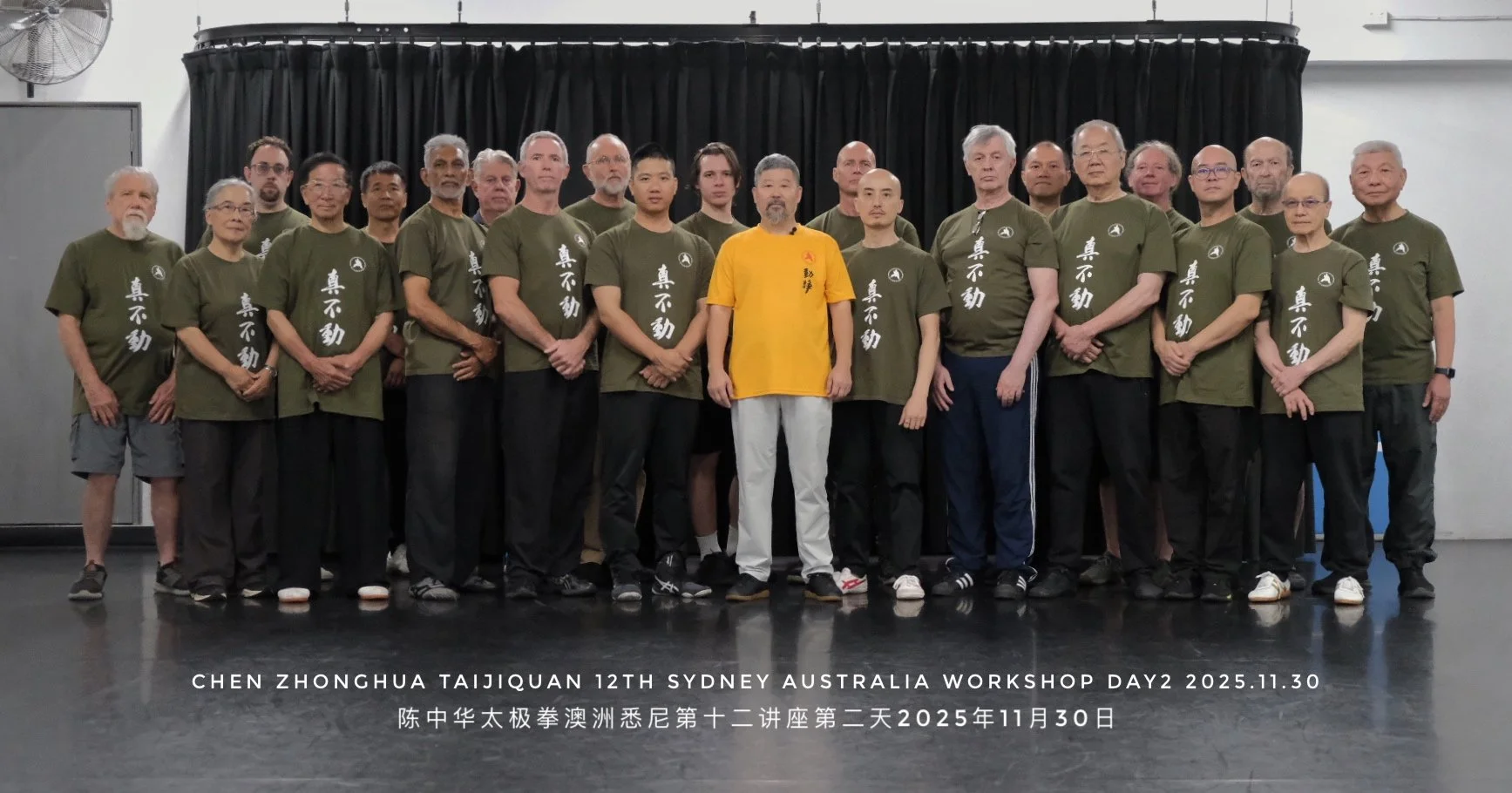
Sydney workshop November 2025
Master Chen Zhonghua studied with Grandmaster Hong Junsheng and Grandmaster Feng Zhiqiang. In 2004, Hong Junsheng’s family and disciples selected him as the International Standard Bearer of Chen Style Taijiquan Practical Method.
He has conducted regular Sydney workshops since 2012. This is the 13th Sydney workshop.
The opportunity is to move beyond reading about his background or watching his demonstrations: to experience his teaching and ability directly.
Dates, location & fees
Choose your attendance.
28–29 November 2026
Saturday and Sunday
Morning 8:30–11:30am
Afternoon 1:30–4:30pm
Both days · All times are Sydney local time.
Evolution Performance Centre
Level 2, 575–597 Pacific Highway
St Leonards NSW 2065
Two days
A$380
The full weekend
Early bird $360
One day
A$240
One full day
Early bird $230
Half day
A$160
One session
Early bird $150
The full weekend gives you the most time to observe, practise and return to the instructions. One-day and half-day options are available when you cannot attend both days.
Fees in Australian dollars. Registration and payment through Square. The booking page opens in a new tab.
A question about attendance or suitability?
Ask Brian about the workshop.
Questions & Expectations
Before you book
A workshop is a concentrated opportunity to learn.
What you do with the instruction afterwards matters.
-
Ask for clarification about what you are being asked to attempt. There is a difference between clarifying an instruction and changing it to fit your current understanding.
You need a task that is clear enough to practise. You do not necessarily need to understand everything it is intended to teach you before making an honest attempt.
The aim is not to remain confused. It is to work through the unfamiliar in a specific, practical way.
-
No. Experiencing something and being able to reproduce it are different stages.
Contact can reveal a distinction you had not recognised. Developing the ability to produce it yourself requires instruction, correction and continued practice.
The workshop provides an opportunity to encounter the method directly and identify work to continue afterwards - not a promise of mastery in a weekend.
-
This is a group workshop, not a private lesson. Learning includes practising the exercises and observing demonstrations, questions and corrections involving other participants.
A correction given to someone else may expose something relevant to your own movement.
Private training is listed separately for Monday 30 November. Contact Brian about arrangements and availability.
-
The suggested preparation is to become familiar with the positive and negative circles and the first 13 movements of Yilu. These are starting references, not a test you need to pass before asking questions.
For existing students, consider bringing one or two specific questions from your practice. Come prepared to revisit something basic rather than expecting every instruction to be new.
-
Wear clothes that allow you to move comfortably, and bring water and a notebook.
Hands-on learning involves physical contact during demonstrations and exercises. Speak with Brian before booking about an injury, accessibility requirement or concern about participation.
You are welcome to ask for an exercise to be explained and to communicate your limits.
-
A complimentary introductory class is a useful way to experience the teaching before committing to a workshop.
An in-person class lets you encounter the training directly. An online introductory class is also available for those unable to attend in Sydney. Neither requires an ongoing commitment.
-
The workshop offers concentrated instruction and direct physical experience with Master Chen.
Regular practice is where you keep working on what you have encountered. In-person and online classes provide opportunities to revisit instructions, receive correction and investigate questions over time.
You are not choosing between a workshop and a practice routine. They serve different parts of the learning process.
Begin with the method
Come with questions.
Leave with work to do.
Experience the difference between watching a movement and feeling what is happening. Work with specific instructions. Give your ongoing practice something concrete to investigate.
You do not have to understand it all before you begin.
28–29 November 2026 · Sydney
Two days A$380 | One day A$240 | Half day A$160 | Early bird discount before 31 Oct 2026
Not sure whether the workshop is right for you?
Ask Brian.